The first thing you notice about Ground Up is that it’s not written by the lead actor. A first for an Australian sitcom in 2026! And probably a lot longer, it’s too depressing to check.
A sitcom written (or co-written) by its lead doesn’t have to suck. May we direct your attention towards The Games, and not for the last time in this review. But it’s a sign of just how deeply the… let’s go with “contempt”… for the audience runs at the ABC that for a long, long time now pretty much the *only* way a comedy gets up is if they’re written by the lead.
Not because they have an insight into the character they’re playing. If that was the case, then Fisk would have had a lot more support fresh out the gate. But because having one person taking on two roles is cheaper.
And for every example where having the cast write the scripts has worked out fine (cough Frontline cough), there’s three where the scripts really, really could have done with having an experienced writer give them a once over. You know, someone like Gary McCaffrie, longtime writer for multiple Shaun Micallef projects, various sketch shows, and now Ground Up.
You can spot the difference right from the start. Multiple characters with actual substance! Character dynamics that feature an element of nuance! The ensemble is briskly defined to excellent comedic effect! We sure didn’t get any of that with Dog Park.
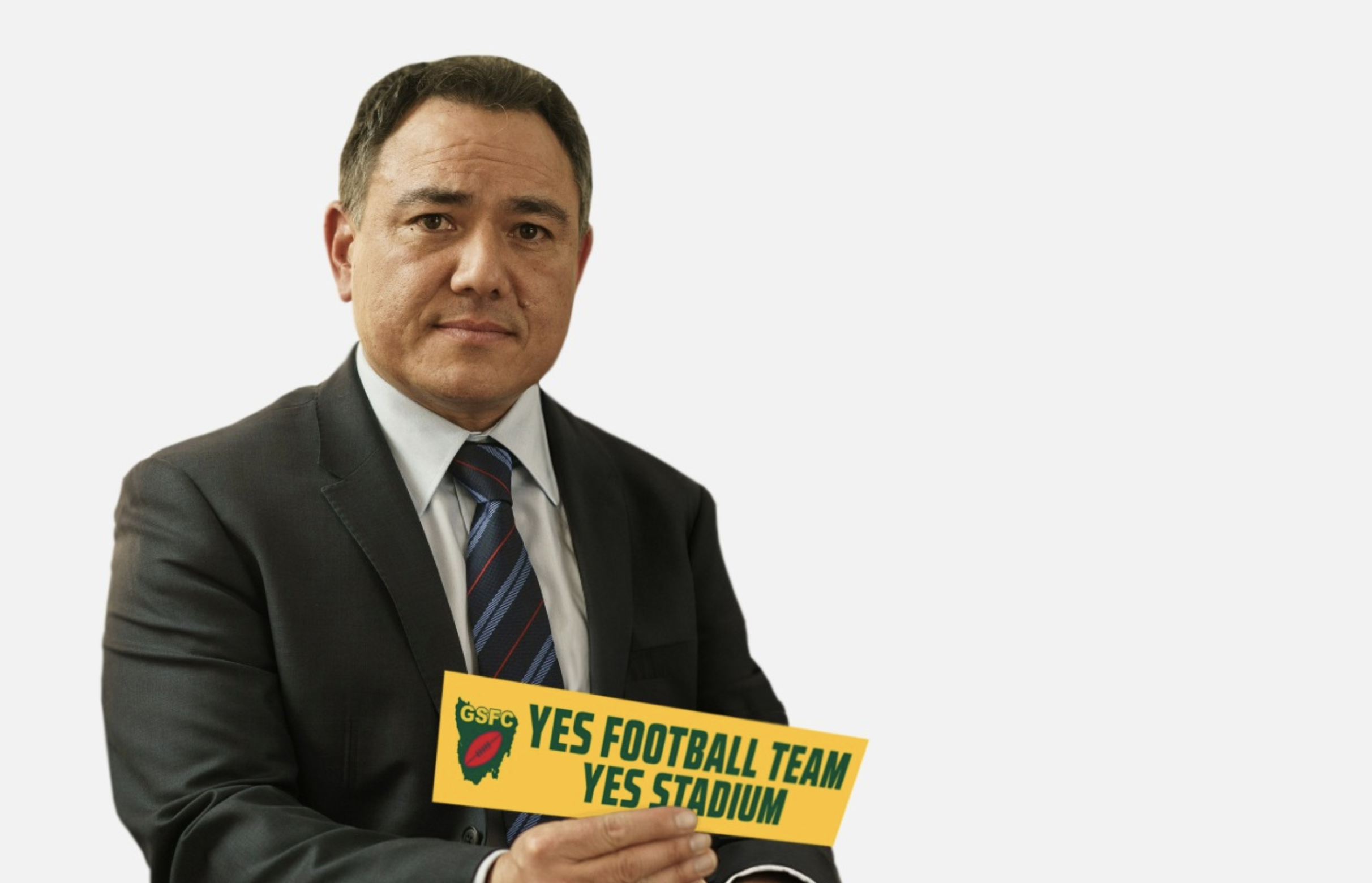
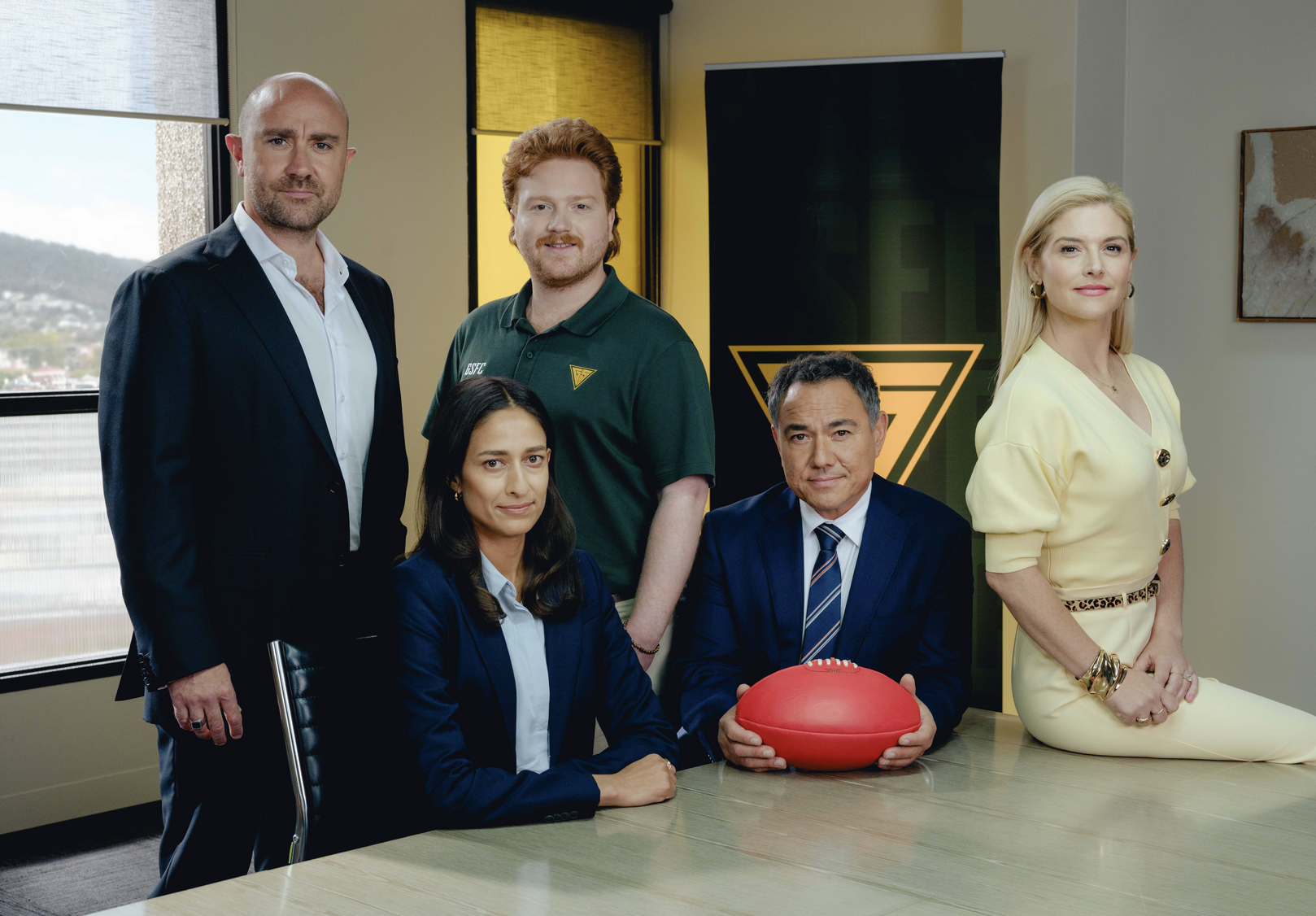
The set-up is fairly straightforward. Pang’s character Hugh has been sent to Tasmania to oversee the formation of the island’s first AFL club. This largely involves building a very expensive new stadium for reasons only known to the AFL. So his job involves schmoozing sponsors, winning over local politicans, dealing with underlings of varying competence, keeping his boss happy, and hiring the people who’ll eventually run out onto the field. If the field ever gets built.
And while Sam Pang is the nominal lead, playing a character that’s a perfect showcase for his dry wit, this really is an ensemble show. Public servant overseeing things on behalf of the State government Destiny (Emma Harvie) is basically a co-lead, with well-defined goals (not a football reference) that are largely (but not always) at an angle to Pang’s. Personally, they strike sparks; it’s their professional desires that make them uneasy allies. There’s also an assistant who’s useless, and a number of other characters in their orbit whose roles – both professionally and comedically – are clearly defined.
That’s a lot of words to say “Ground Up is well written”. And yes, it’s well put together on a script level. More importantly, we almost never get to see this kind of thing coming out of 21st century Australia (let alone Tasmania). Even something like Optics, which vaguely gestured towards this kind of office-based complexity, kept on dropping the ball.
If you’re looking for broad comedic performances or off-the-wall silliness, jog on. Okay, there is a bit of silliness going on here. Club songs and club mascots are both ruthlessly mocked. But mostly this is about hanging comedy scenes off intricate plotting; The Games is the obvious example, but if you remember Yes, Minister that’s an even better comparison.
Just to be clear, Ground Up isn’t perfect. It’s not about big laughs; wry smiles is more its wheelhouse. And some of the plot twists and turns don’t quite come off. Occasionally it feels like its trying to head off questions nobody’s actually asking. But it’s the kind of sitcom where the results are cumulative. The more you get to know the characters and the situation, the more amusing it gets.
Put it this way: it’s the best Australian-made office-based comedy where two rivals are forced to work together that we’ve seen in the last few months. Let’s hope there are no more entrants in that category this year.
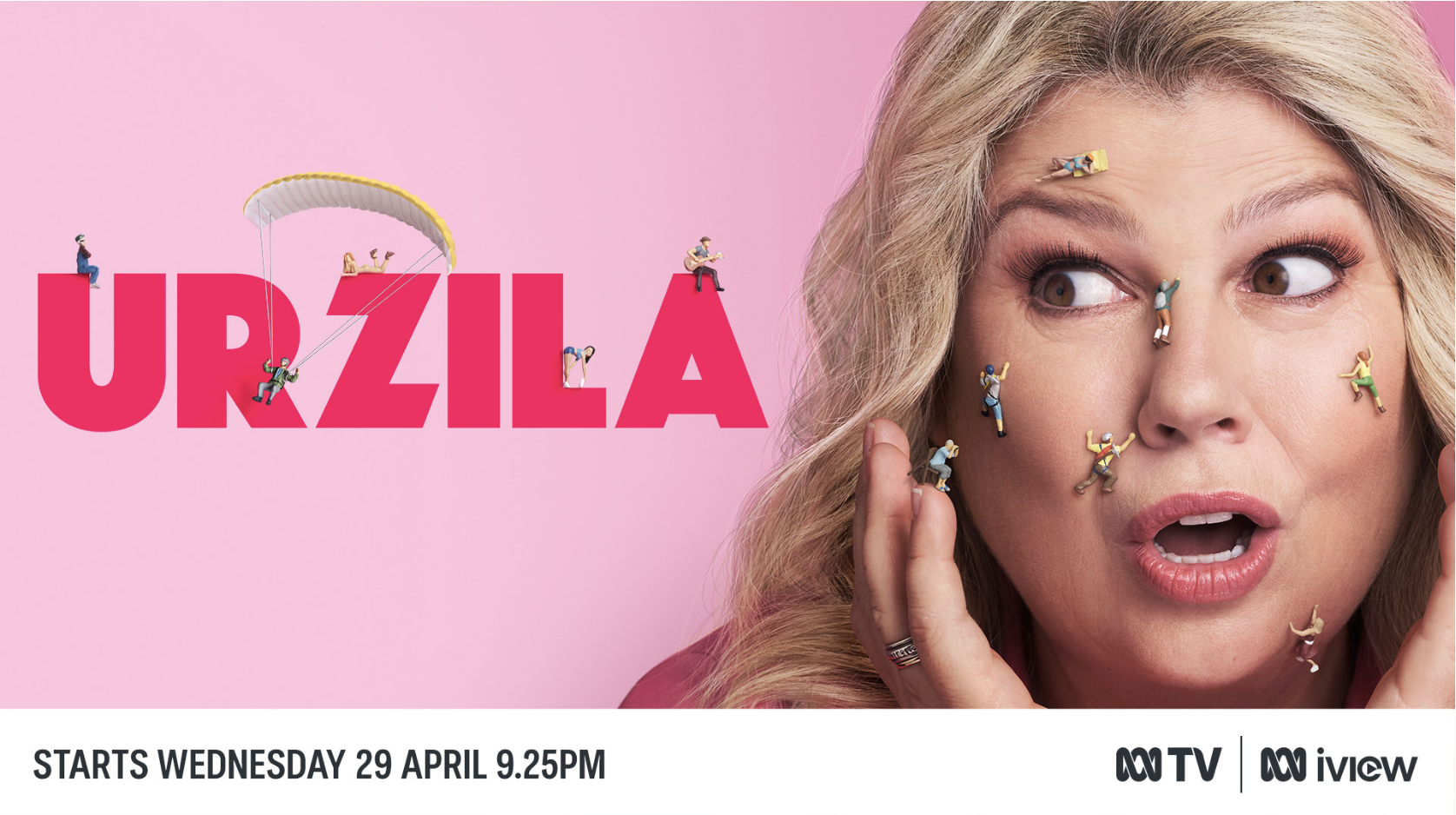
Okay, so Urzila turned out to be slightly less varied than we’d hoped. Still (mostly) funny tho! And as it’s unlikely we’ll see a second season – or any other local sketch comedy on the ABC before they give up terrestrial broadcasting and become just another website – we can just space out our viewing to make every sketch seem fresh. How’s one every six months sound?
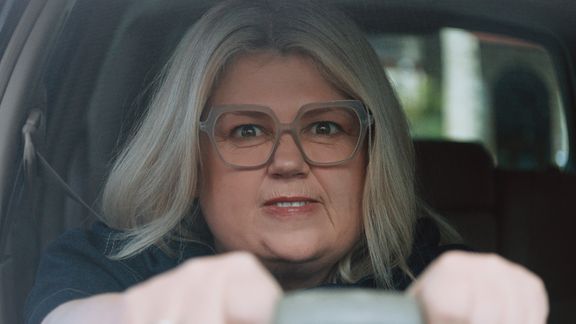
So to say the nice stuff first, Urzila Carlson herself is very funny; even the wobbly sketches were saved by her performances. The supporting cast were also good – and up for some edgy stuff at times – while the big name guest stars threw themselves into proceedings. Sketch comedy is back, baby! Is the kind of thing we wish we could say after watching this.
Most successful stand-ups, or at least those with name recognition, do an hour show a year. Come up with 50 minutes of gags, wrap them in some kind of overall theme, test it out in a few low-key venues and then hit the road! Which is why a big part of being a successful stand up is your performance skills; writing an hours worth of decent comedy a year is probably the easiest part of the job.
Urzila was based on the stand up of Urzila Carlson (duh -ed), and based on the previous paragraph it seems likely that Urzila’s stand up work is what you’d expect. She’s a funny mate who turns up once a year with a bunch of solid gags, and if those gags are largely covering the same ground, great! That’s what you go to see her for.
But distilling over a decade’s stand up into six half hour episodes? That’s going to reveal some consistent themes and subjects. Ideally you want a show that feels like a peek inside the (twisted) mind of whoever’s name is up front. But you also want to discover that they think about some things you wouldn’t have expected.
A massive positive about this show is that we get sketches from a middle aged woman’s perspective. After decades of TV sketch shows looking elsewhere, it’s a goldmine of untapped material. It’s great to have in-depth sketches about bras, nipple hairs, the menopause, all the things women experience.
The downside is that it’s all based on stand-up material, which works differently to sketch comedy. With stand-up, you can spend a whole hour explaining something that happened over five minutes. You can go deep with the detail, wander off on tangents, hold back information, and so on.
With a sketch, you have to show what happens. Which means you have to hope the dialogue and action is funny – you have to go from telling to showing. It’s a different type of comedy; these sketch adaptations of her stand up highlight those differences.
The subject matter is the show’s big strength. Adapting a bunch of stand-up is its big weakness. Too often Urzila ends up being relatable rather than funny. That’s still better than nothing, and there is a lot of funny material here.
It’s just that Urzila is a lot funnier than Urzila turned out to be.
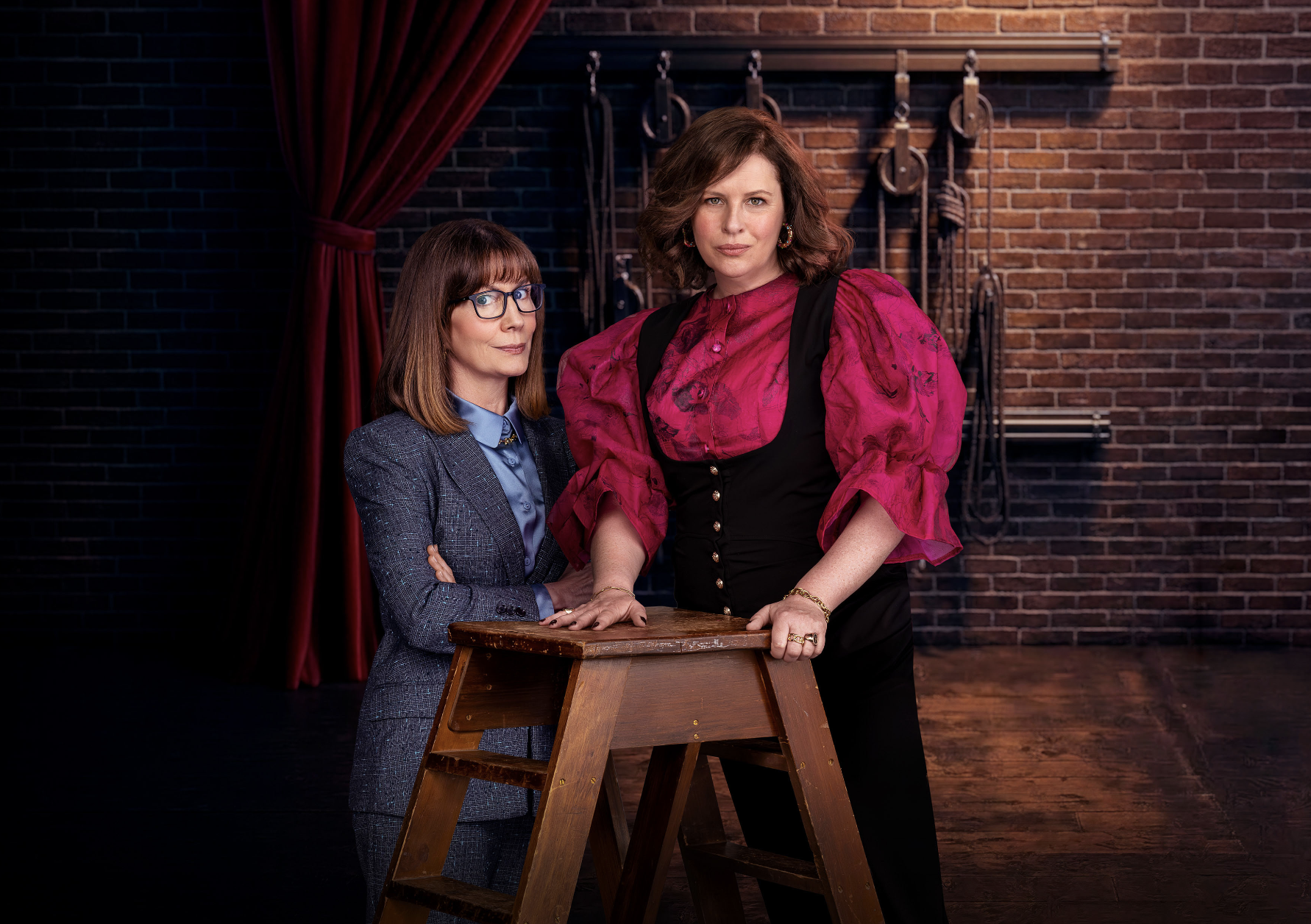
Creating a hilarious ensemble sitcom isn’t easy, but some approaches work better than others. And as we say goodbye to Bad Company on the ABC and hello to Make That Movie on HBO Max, it’s not hard to identify which approach is funnier.
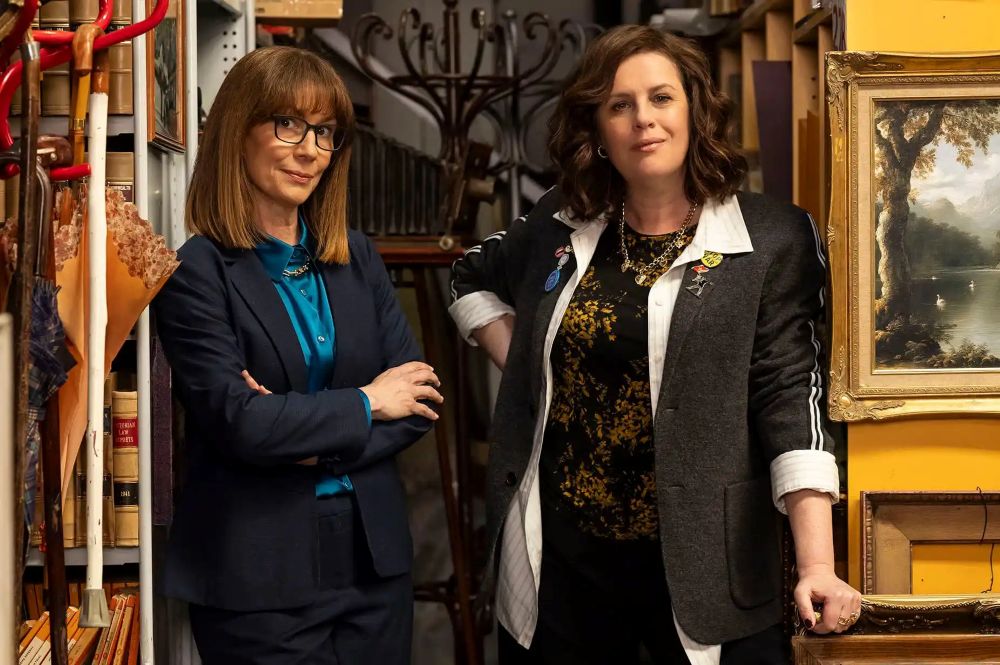
Bad Company is a show that should have generated a lot more laughs than it actually did. It’s set in a theatre company, a place where strange people get away with the sort of stuff that’d get you sacked in most other workplaces, yet the show felt flat across most of its six-episode run. It was only in the final episode, when things came to a chaotic climax, that there were real laughs to be had.
The main issue was that only two characters were given any decent airtime or dialogue: artistic director Margie (Anne Edmonds, also the writer and creator of the series) and CEO Julia (Fisk‘s Kitty Flanagan). Sure, there were plenty of people in the background who occasionally got to chip in with a line or two, but can you remember who, say, Donna and Kat were? Or indeed, which of those two was the one whose solution to every problem was to turn the internet off?
This lack of fully developed and memorable supporting characters meant that a lot of the time, the action and attempts at laughs came from Margie and Julia fighting with each other while the rest of the cast stood around and watched. At least one more person was getting the spotlight than in your average Chris Lilley comedy, but Bad Company should have gone as hard on the “company” part of the title as it did on the “bad”.
Unlike your average Chris Lilley comedy, though, Bad Company did, at least, have some funny moments. Like Julia’s horrific idea to have a fried chicken company sponsor a major production, and the sequence with the Tesla. There were also some memorable guest appearances from Nicholas Bell (The Games) as dodgy French clown Marcel and Phil Lloyd (Review with Myles Barlow) as Gary, an actor who went full method in the part of Julian Assange. But the show needed a lot more of this.
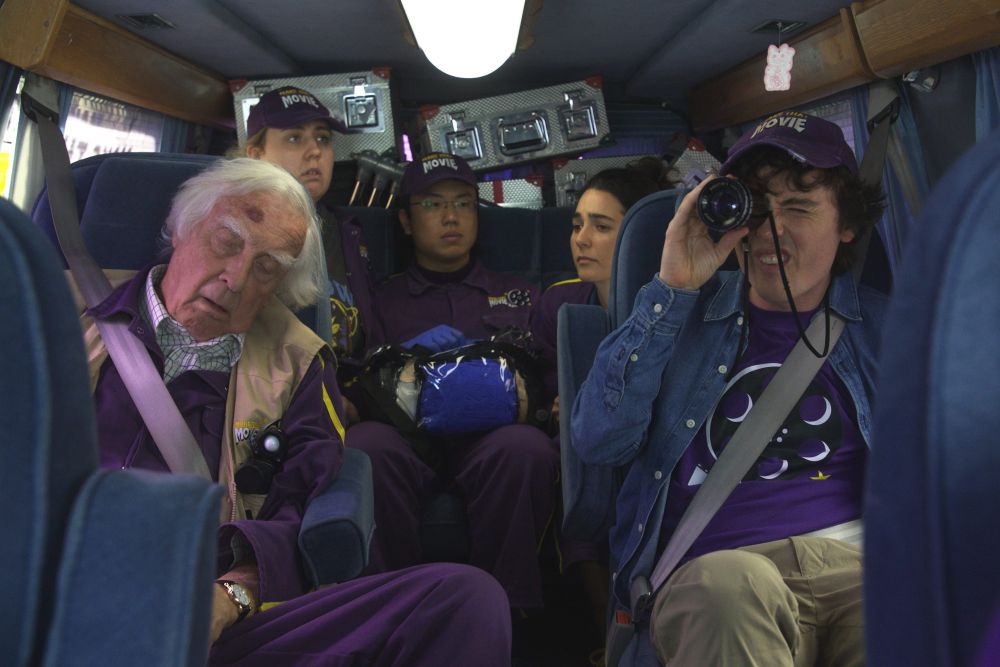
Make That Movie, on the other hand, created, co-written by and starring Sam Campbell (Guy Montgomery’s Guy Mont-Spelling Bee), has a well-rounded cast of regular and guest characters, who generate a lot of laughs.
In this high-concept mockumentary series, Campbell plays an award-winning film director who travels around the UK with his team of cinematographer Winnie (David Hargreaves), sound recordist Pat (Helen Bauer), fixer Jess (Lara Ricote) and general dogs body Sebastian (Aaron Chen). Together, they make movies based on ideas suggested by members of the public, leading them to cover a weird and wonderful range of subjects and genres. Their efforts include a horror film about a couple who turn into snakes, a science fiction drama about elderly people being scammed online, and a High School prom film where an ancient bog man emerges from the slime and goes on a date with a student.
Aside from the obvious laughs generated from parodying sci-fi, horror, teen dramas, and mockumentaries, the Make That Movie team get plenty of funny lines as we learn about their strange backgrounds. Oddly, the one person who remains a kind of mystery, at least in the first few episodes, is Sam Campbell himself. Although we do learn he’s maybe not the greatest film-maker in the world.
Make That Movie adopts a very different sitcom style from Bad Company’s, of course. The central concept of Make That Movie is hard to believe, whereas Bad Company portrays theatre companies fairly accurately. Yet Make That Movie, with all its strange hyper-realness and oddly naive characters, is not exactly unbelievable. It gets the tone of reality documentaries, where a carload of experts “fix” something for someone, spot on. And every character and subplot in the show is well-crafted, used to drive forward the action and to achieve the maximum number of laughs (shout out to Asim Chaudhry, of Black Mirror fame, as a pervy High School Principal).
Getting a chance to write and star in your own sitcom is a huge achievement for any comedian, and the temptation to make yourself the focus of the attention in your show must be huge. But sitcoms are about groups of people interacting, and the best laughs come when all the characters – including the bit part players – have a reason to be there and something funny to say. Bad Company failed to get laughs a lot of the time because it didn’t make as much use of the supporting and guest cast as it could have, while Make That Movie thrives on throwing a bunch of weirdos and eccentrics together and letting the magic happen.
Six weeks into Glenn and Mick’s Celebrity Intervention, and it’s time for a reassessment. If you watched the first episode, with Carrie Bickmore, and walked away never to return, we get you. Honestly, we thought we’d be writing about this show again much sooner, because after that opener, it was clearly going to be axed after a few weeks. But no, it’s clawed its way back, and here we are staring down the barrel of episode seven.
What’s kept this on air? For starters, the second episode with Sam Pang was actually pretty good. In a roast format like Glenn and Mick’s Celebrity Intervention, you need a roastee who can fight back, or else it looks like bullying and stops being funny. And Sam Pang is a naturally funny guy who’s spent years working with Glenn and Mick, so in his episode, he held his own, got laughs and made a few salient points about the kinda shambolic show he was on…
Like, what actually is Glenn Robbins’ role on this? Mick and the guest host (who’ve included Lawrence Mooney, Kate Langbroek and Denise Scott so far) seem to do most of the talking, so why does Glenn even bother to show up? Can it be purely so that Mick can throw in the occasional Uncle Arthur reference? Or show footage of Glenn in Kath & Kim or Fisk in the partial nude? There are worse reasons to have Glenn Robbins sitting there, we guess, but it’s still kind of odd that one of the advertised hosts does so little that an additional guest host is needed.
Then there’s the other problem with Glenn and Mick’s Celebrity Intervention: it works less well when non-comedians are the guest, such as with the episodes featuring Dr Chris Brown, Guy Sebastian and Mick Fanning. Both came across as good sports and decent blokes, of course, just not hugely hilarious ones. Which puts the pressure back onto Glenn, Mick, the co-host and whatever prop gags they can come up with. Shout out to the Swiss Army Sneaker Mick pulled out in the Mick Fanning episode. Less hilarious were the plugs for mentions of the various beers Mick and Mick have financial stakes in.
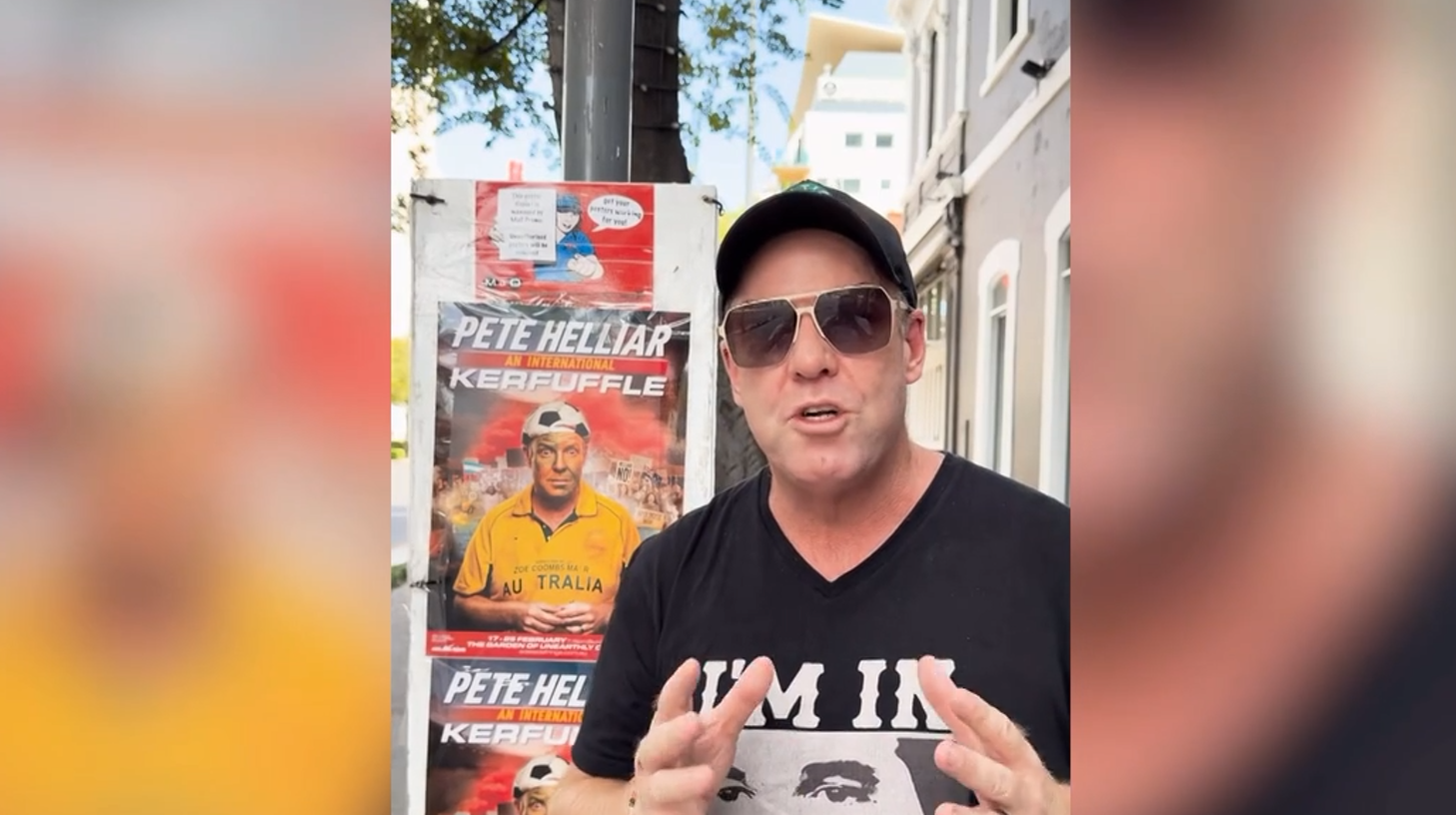
So, the key to making this show work seems to be booking a comedian. Even if that comedian is Dave Hughes, the one guy who, out of all the guests so far, probably does actually need an intervention. Even guest Peter Helliar thought so, in a pre-recorded video explaining why he thinks Hughesy is self-obsessed, delivered in front of a poster for his own comedy show. We guess Glenna and Mick can refer to that when Helliar inevitably guests on the show himself!
As for the upcoming episode seven, the guest will be Jim Jefferies, who’s both a comedian and someone who, like Hughesy, has been up to enough crazy stuff over the years that even if you don’t find him funny, then maybe the crazy stuff will be entertaining. Let’s hope so.
It’s been a long time between drinks for John Safran. His last major issue-tackling role on our screens was back in 2016 with The Goddamn Election; a decade later he’s looking at the touchy topic of free speech with Shut Your Big Fat Mouth John Safran!. Is Australia’s most notorious prankster finally about to say the unsayable?
Well, no. Safran interviews both mainstream-ish figures who’ve been cancelled or lost work for their views, and the kind of fringe figures that have been his stock-in-trade for the last few decades. If you believe that Nazis should never be given a platform, Safran hears you. He just doesn’t agree with you.
Taken as a whole it all feels more like a summary than an in-depth investigation. Many of the interviews are pretty short, though Safran does make sure to give more time to the fringe dwellers we don’t usually hear from. Some of his conclusions are unsurprising as well. We learn that a lot of “free speech” is a front for money making scams, the ABC doesn’t want anyone talking about the Middle East from either side, Nazis are smirking buttheads, pretty much everyone charged with offending people feels they were just misunderstood, and Safran feels it’s more important to expose dodgy views to the light of day than ban them outright.
It’s the kind of argument that justifies Safran’s earlier, dodgier material. To be fair, he admits it. There’s a (comedy) segment where he talks about the golden age of the 90s, when everyone could be offensive to everyone else and it all worked out. But that was when offensive and extremist views rarely got much of an airing. And when they did, you had to personally track them down – if only by tuning into a John Safran series. These days they’re everywhere and coming at people full volume as part of cultural warfare. The calls to silence them are as much from people just wanting some peace and quiet as from those those trying to stifle opposing viewpoints.
And those that do want to silence people usually fumble their attempts, causing more harm than good. It’s not news that Safran’s interest in religion is more from a personal faith side than a cultural one. That means that preachers wanting to quote religious texts that others find hateful or protesters using political beliefs to attack faiths are given a bit more sympathy here than you might expect.
(again, Safran’s views can feel a little old-fashioned. He believes in a separation of personal beliefs and public speech in a way that a generation brought up on social media, where silence on topical issues is often read as support for the bad guys, probably don’t)
So there’s no easy answers here. Who cares: what about the comedy? Well, Safran does expose some pretty funny views early on, if you find an old lady earnestly talking about secret “full term abortions” funny. He does do one good old fashioned prank, when he learns to paint so he can paint a flattering portrait of Gina Rinehart to make up for that one she didn’t like. Unfortunately he can’t give it to her, even when he pulls out the “Michael Moore megaphone” (one for the old school fans there).
There’s also a bit of a long running joke about Safran wanting to be able to give an “ironic” Nazi salute to an enemy of his. Only the payoff doesn’t quite happen. Or maybe it does? We don’t see him giving a salute (it’s illegal in Victoria), but he does give one to a dickhead out of sight. Is it the same dickhead who tried to get him cancelled a few years earlier? Answers on the back of a postcard, please.
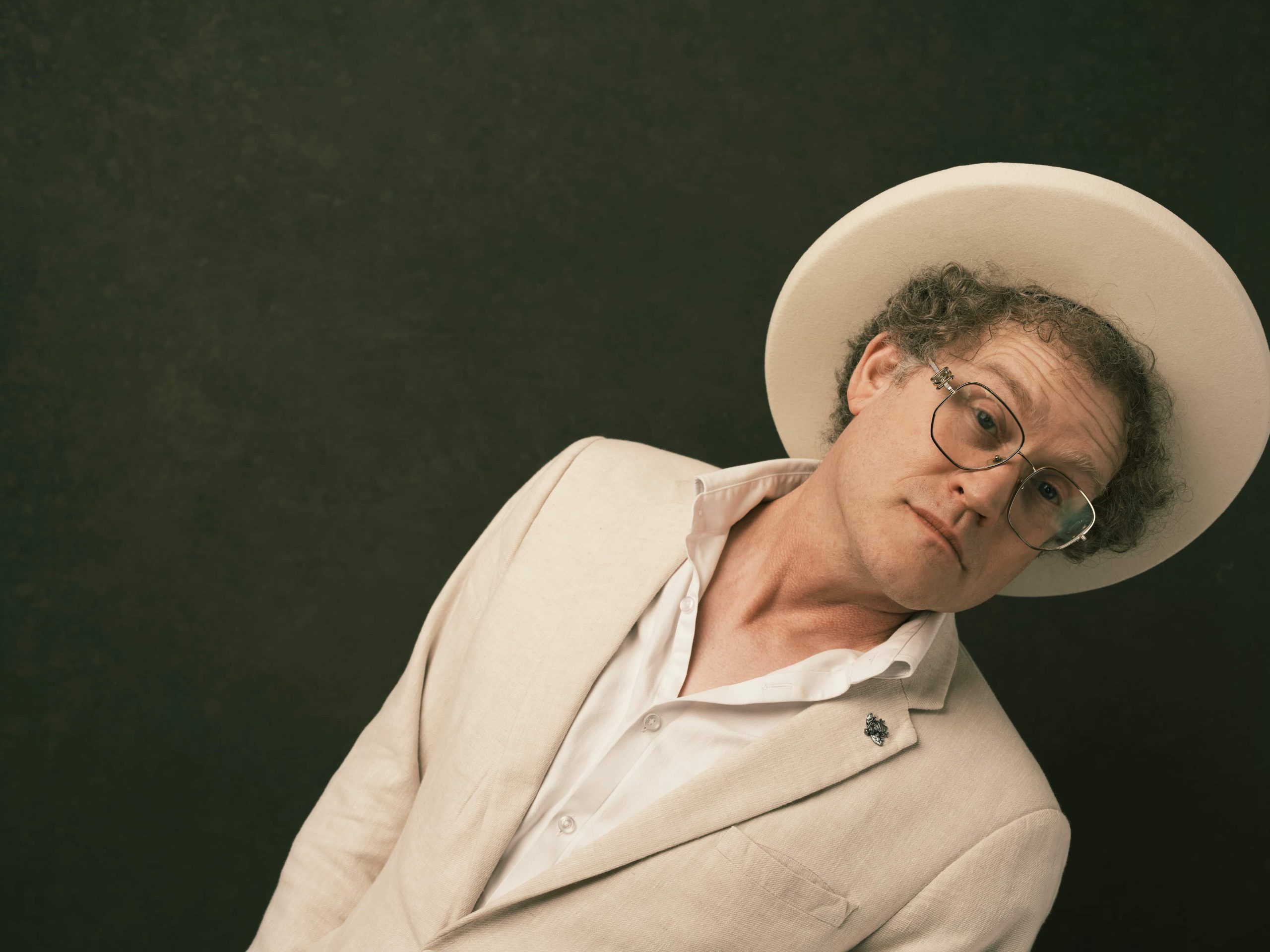
Whatever this special’s flaws, it’s good to have Safran back, now in an all-white suit and hat (one of the Tumblies team reckons it’s to make him look like the opposite of a Orthodox Jew). Probably the most interesting angle here is Safran looking back at his old work. Boundary-pushing comedy hits different in 2026; one of his sketches was recently used by right-wing groups as anti-Indigenous propaganda. At times Safran’s plea to let all viewpoints speak sounds a little like him defending a world view the world has left behind.
Which would be a shame, as it would mean we’ve left satirists like Safran behind as well.
Sky News Australia’s current relationship with comedy is being clipped and joked about on The Weekly with Charlie Pickering and The Cheap Seats, but can it generate its own laughs with the new weekly comedy quiz show Quizzical?
Er, no. It cannot. And based on its first episode (which aired last Sunday, 17th May), it can’t even produce an entertaining half-hour-long quiz game.
Let’s look at its various problems…
First up, Quizzical is cheap. Which isn’t usually a problem with other shows – in fact, lack of budget can sometimes work in comedy’s favour, forcing the cast and writers to be inventive with what they have. Except here, it looks like the format and the quiz questions were put together by a couple of overstretched Sky News staffers who didn’t have time to create unique and entertaining segments. Which is why the show consists of a grab bag of rounds well-known from other quiz shows (Who Am I?, Real or Fake, Fast Money).
And, yes, these rounds turn up, with slight variations, in lots of quiz shows, except today’s quiz shows do a bit more with them than have two teams of two sitting in a row answering the questions. Even Sky News’ devoted fans are familiar with the gloss and, we guess, excitement of The Floor, Tipping Point or The Chase, and they will take one look at Quizzical and think it’s something from community television.
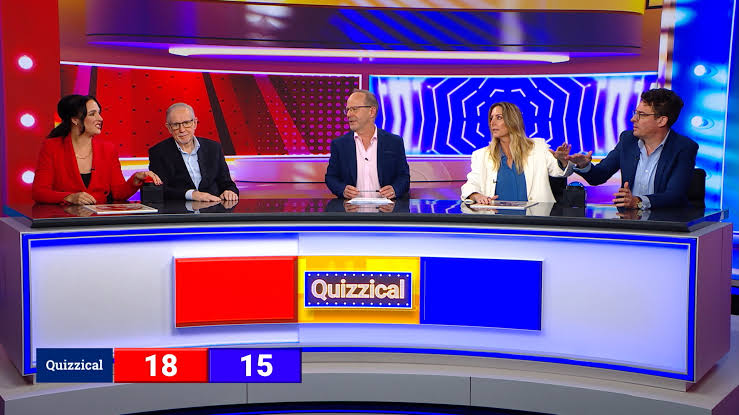
But again, sometimes the cheap and cheerful approach can work in a show’s favour. Except for that you need good talent and on Quizzical’s first episode, the host was Sky News’s James Macpherson, and the panel were Lucy Zelic, a Liberal devotee, a “SaveWomensSports advocate” and regular panellist on Sky News, Michelle Stephenson, a Liberal councillor and Sky News journalist, Kel Richards, an author, lay Christian and lexicographer, who often goes on Sky News and talks about unusual words, and Joe Hildebrand, long-time News Corp journalist and right-leaning controversialist. Unsurprisingly, the laughs weren’t plentiful here, although they did try.
Before the taping, the two teams of Lucy and Kel and Michelle and Joe had presumably been told to be high energy, do banter with each other and get in there with snarky comments about the Left, but…these are not funny people. Their idea of humour is to call Greens voters “lunatics” and to make insensitive remarks about Elliot Page. And maybe that would be enough to keep the average Sky News After Dark viewer entertained, because at least they had the quiz to fall back on if the jokes weren’t firing. Except, see above. The quiz sucked.
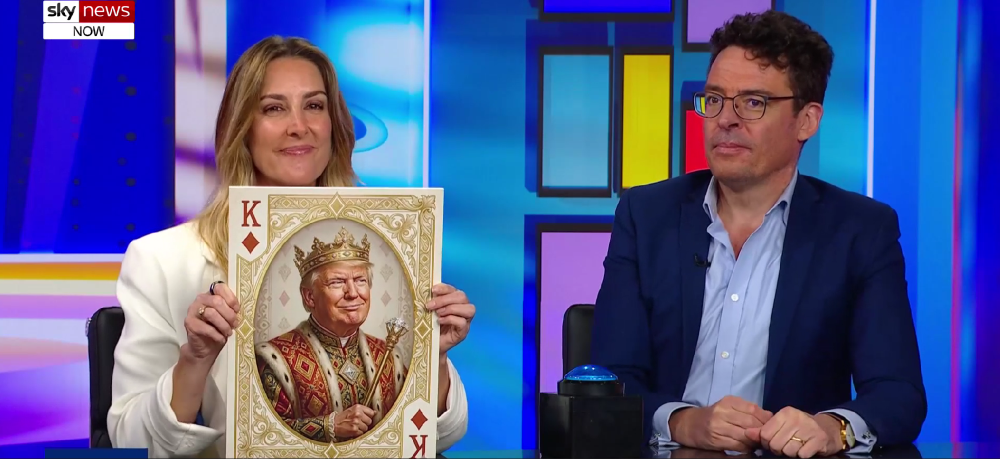
Honestly, the most interesting bit of Quizzical was seeing how hard the show leaned into what people who don’t watch Sky News After Dark imagine it’s like. Such as non-stop baiting the Left (What about all those Labor broken promises!), or bigging up figures associated with the Right (there were questions about Andrew ‘Twiggy’ Forrest and Sydney Sweeney). The nadir of this, naturally, involved the current US President, with each team being able to play the ‘Trump Card’ in a chosen round to double their points*.
But in the end, that’s what Quizzical is presumably about. Not about being the best quiz team on the day or creating something entertaining – hell no! This is about winding up the right-leaning audience and inspiring them to vote for the right people when the time comes. And an opportunity for the panel to be so great at sucking up to The Donald that they’re whisked off to the US to live out all their right-wing dreams.
* This is a tragic rip-off of It’s A Knockout’s Joker card – Ed.
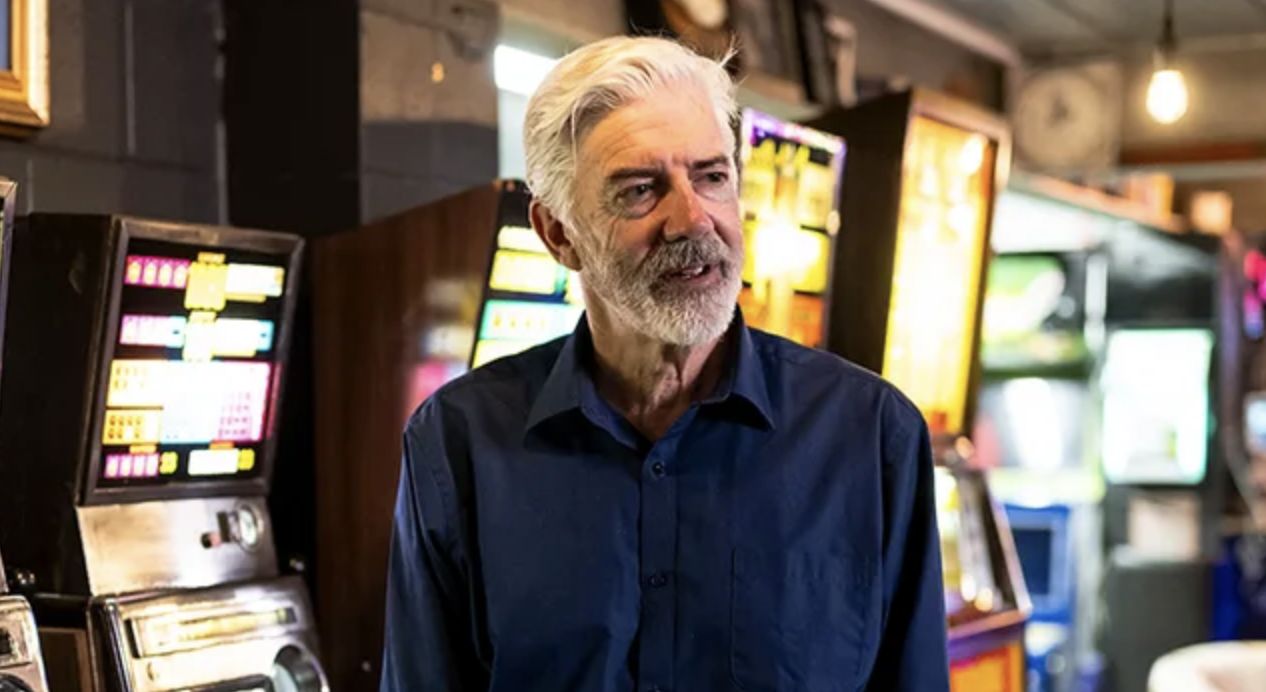
Shaun Micallef’s back! Not being funny or anything though, he’s got another one of his “what the fuck is wrong with you people” documentaries on the ABC. Titled Shaun Micallef’s Going for Broke, this time he’s got gambling in his sights. And no-one is safe!
Just kidding, the whole thing (well, the first episode of the whole thing) is a pleasant enough ramble through the world of gambling – that is to say, the entirety of Australia and everything within it. Micallef is a top bloke, everyone he meets is happy to show him the ropes, it’s all harmless fun until it’s not.
Whereas his last look at vice (booze to be exact) felt a little bit like being scolded by that cool but slightly remote uncle you really want to impress, this one’s slow decent into finger-wagging makes more sense. Drinking to excess is bad; drinking in moderation has at least some benefits adults can choose to enjoy. Gambling? It’s bad news all the way down no matter how much the grannies at bingo are enjoying it.
So while the overall arc is roughly the same (at least according to the episode guides), the low-key outrage that slowly builds is more justified. Plus there’s a lot of Micallef being befuddled by things he’s never encountered before, which is always entertaining. Will he head down to the local brothel to examine sex work in the final part of his Trilogy of Vice? We can only hope.
One of Team Tumbleweeds caught up with a friend a month or so ago and not quite the first thing out of their mouth was “do you think Shaun Micallef is doing too much?” Good question! The conversation that followed raised the point that, in the wake of Mad as Hell, Micallef seemed to be heading off to take a break. Only he just took a break from comedy. Which sucks, because comedy is what he does best.
Going for Broke is perfectly fine for what it is, and it’s clearly the kind of thing Micallef wants to do. The frustration from our neck of the woods comes from knowing that Micallef is one of the very, very, very few people with a decent chance of getting a new comedy project up and running on Australian television. And he’s not. Doing comedy, that is.
Sure, at the moment we’re spoiled for choice when it comes to local comedy. We can’t keep up! Did you know we’re actually enjoying Guy Montgomery’s Guy Mont Spelling Bee this year? Of course not, because we haven’t finished writing that post. But it’s not going to last, unlike Gruen. Which we’re not enjoying, just by the way.
Thing is, while Micallef is a very good documentary host, we already have a bunch of them. What we don’t have is anyone else making anything like what we got with Mad as Hell (or Newstopia or we don’t need his entire filmography – ed). “Former comedian hosts thoughtful documentary” is not news. “Former comedian still extremely funny” is.
It’s perfectly fine for Shaun Micallef to make and do whatever he likes; he doesn’t need our permission or approval. And he’s making good television! But for comedy fans, every time he’s back on our screens – don’t forget the second season of Shaun Micallef’s Origin Odyssey on SBS later this year – it’s a reminder that we’re not getting the good stuff. And even at the best of times, there’s never enough of the good stuff to go around.
When it comes to sketch shows, we’ve learned not to pass judgment until at least week two. First week, pretty much every sketch show seems fresh and funny. Second week? Oh look, turns out all those fresh and funny sketches are going to be reoccurring, pounding the same handful of jokes into the ground week after week. Who likes repeat comedy characters? Nobody except the writers, who don’t have to come up with new gags each week.
The good news is, in week two Urzila only features one returning sketch. Looking ahead, while there’s a few more returning characters in coming weeks, they’re scattered throughout the series. So no “it’s the same characters you know and love!” back week in week out. No catchphrase comedy either, thank fuck.
As for the subject matter? Well, the show’s titled Urzila, and Urzila Carlson is a successful stand-up comedian with a well-established brand, so it’s no surprise there’s some overlap. “Middle-aged lesbian makes jokes about being a middle aged lesbian” isn’t exactly a news flash. That said, it does stand out a little in the world of ABC comedy, in that it feels just that little bit more personal than their usual output.
Put another way, the ABC tends to like comedy that feels like the kind of comedy you get from the ABC. Your Optics, your Dog Parks, your Gold Diggers. Did someone mention the Mother and Son reboot? Even when it’s a personal project, it usually has the feel of something that’s had a bit of ABC editorial input. Possibly due to this being a co-production with Warner Brothers Australia, Urzila feels more like a show that could have turned up anywhere. Hopefully it’s the beginning of a trend.
Something else we’d like to see become a trend: comedies that are funny. Carlson knows what she’s doing and she’s a very funny performer, so it’s no real surprise the sketches here are consistently strong. The stand up segments between them are a little more uneven, but that’s largely down to length. Carlson is someone who can milk every possible laugh out of a situation, and both the stand up and sketches often get funnier the longer they go on.
Sure, a few outstay their welcome. And not all the big name guest stars serve up their best work here either. It’s a sketch show; you expect things to be a little uneven. But on the whole, this is a quality package, one that showcases Carlson’s talents while leaving room for the supporting cast to shine.
It takes a confident comedy show to end with bloopers. If the mistakes are funnier than the actual show, that’s not a good look. If the mistakes aren’t funny, why show them to us? Urzila hits the sweet spot with its end credits, a collection of screw-ups that sell this as a fun show first and foremost. Carlson is a safe pair of comedy hands, and here she serves up a winner.
Sam Pang leads all-star cast in new ABC comedy Ground Up
A new chapter of Australian comedy kicks off next month with the arrival of Ground Up, a six-part series led by one of the country’s most loved comedians, Sam Pang. The series premieres Sunday 7 June at 8:30pm on ABC TV and ABC iview.
After years of trying, Tasmania has finally been given the green light to field a team in the AFL – but there’s a catch. The locals have to build a new stadium.
Given Tasmania has a housing crisis, and a health crisis… and two sizeable stadiums, not everyone thinks the 1.13 billion dollar taxpayer spend is the greatest idea.
AFL administrator Hugh Shen (Pang) has been sent from Melbourne, tasked with establishing the club. There’s a divided public to win over, oppressive deadlines to meet, feisty protesters to handle and inoffensive mascots to employ.
Oh – and there’s also the small matter of finding the coach and the players, which might lead, eventually, to someone playing football.
Should all be a piece of cake.
Running out alongside Pang in the workplace chaos is a stellar ensemble cast including Emma Harvie (Colin From Accounts, RFDS), Dylan Murphy (Upper Middle Bogan), Josh McConville (Plum, Black Snow), Lucy Durack (Lift, Love in Lockdown)and returning to her comedic roots, Marg Downey (The Newsreader, Dear Life, Fast Forward).
They’re joined by an impressive list of guest appearances, including Broden Kelly, Christie Whelan Browne, Dave Thornton,Tegan Higginbotham, Toby Truslove, Lisa McCune, Lachlan Fairbairn, and many more.
To be honest, this doesn’t look as strong out the gate as we were hoping. But it’s also the kind of concept that probably needs a bit of background – as in, getting to know the characters – to work. Comedy sports shows (as opposed to sports comedy) often struggle a bit. Sports fans want more sport, comedy fans want less. Here’s hoping the behind-the-scenes angle keeps everyone laughing.
Usually we’re more than happy to go off on a series after nothing more than a brief glimpse at a cast photo. But Bad Company? We’re still mulling the first episode over. So while we wait for out no doubt amazingly insightful full-length review a bit further down the track, here’s a few odds and ends that have come to mind.
Probably our biggest sticking point is the contrast between Kitty Flanagan and Anne Edmonds. Flanagan’s comedy characters are constantly undercutting themselves in ways that bring out the laughs and work well in a group. Edmonds tends towards extremely self-confident characters that dominate the scene in ways that don’t really leave much room for anything else.
Here Flanagan is basically playing a more financially successful Helen Tudor-Fisk, a character that works perfectly well in an ensemble of quirky types. Only here she’s not connected to the ensemble and has no reason to engage with them – possibly a good thing, as the ensemble is a bit sketchy early on.
With Edmonds’ character, the joke is that she crowds out everyone around her; she’s too big a personality for anyone else to get a word in. The trouble is, being a big personality isn’t funny in and of itself, as Chris Lilley taught us multiple times over the years. It seems like the joke is that she’s self-obsessed and also crap – but we haven’t actually seen that she’s crap. Her plays look bad, but not crazy comedy lady bad, just bad art bad.
So when she’s throwing her weight around, we don’t really know how funny it’s meant to be. Flanagan is introduced firing her elderly mentor, so we know what we’re in for. But Edmonds is just being a bossy bitch and refusing to go along with what the corporate bean-counters want; maybe that’s the right thing to do?
That’s a problem because for Edmonds’ character to work, we have to know where we stand. The laughs from this kind of character come from the way the character is inappropriate. Either they have to be so over the top that Blind Freddy can see they need to get back in their box (hello Edmond’s earlier character Helen Bidou), or they need to be surrounded by more normal characters who can model the correct reaction.
There’s a reason why every successful version of The Office* features a couple of young audience stand-ins who constantly look at the camera and roll their eyes. Here, we don’t have that. We just have a creative director who dominates proceedings but… maybe gets results? She certainly seems to be making art of some kind.
The bigger issue is that a big personality that talks over everyone around her is only funny in small doses. Edmonds is playing the kind of character that should be the scary boss that the actual main characters only deal with in a couple of scenes each episode.
She’s got too much main character energy to be a comedy main character. If you’re going to be the boss in a version of The Office, you need to have a strong ensemble around you. Ironically, Bad Company is aptly named: the company she keeps can’t keep up with her.
.
.
*this is basically “what if we did The Office at a theatre company only Helen Tudor-Fisk was also there”